Study
"People learn more deeply from a multimedia message when they know the names and characteristics of the main concepts."
— Richard Mayer, Multimedia Learning
Before you can build anything, you need to know what you are looking at. Not in the abstract, but concretely: what are the parts, what do they do, and how do they connect? Mayer called this the Pre-training Principle. When learners encounter the vocabulary and structure of a subject before they encounter the complexity, they process it more deeply and retain it longer. Our courses begin here. Not with a firehose of information, but with orientation. Clear language. Key concepts. A map before the territory.
Remember
"Retrieval practice means self-quizzing. Retrieving knowledge and skill from memory should be your primary study strategy in place of rereading."
— Brown, Roediger & McDaniel, Make It Stick
Reading is not learning. Highlighting is not learning. The research is unambiguous on this point. What strengthens memory is the act of pulling knowledge back out, testing yourself, getting it wrong, and trying again. We build retrieval into every module: low-stakes quizzes, flash cards, recall exercises that are interleaved throughout the experience. Not to evaluate you, but to help you discover what you actually know versus what you only think you know. That gap is where real learning lives.

Take off
"Authentic activities can increase the probability that students will transfer knowledge, skills, and problem-solving strategies to real-world contexts."
— Jeanne Ormrod, Human Learning
There is a moment when studying must become doing. Transfer is the word researchers use for it: the ability to take what you learned in one context and apply it in another. It does not happen automatically. It happens through authentic experience, through building real things under real conditions, through the kind of practice that forces you to synthesize everything you have absorbed into something that works. Our courses end here. Not with a test, but with something you made.
PURPOSE OF THIS WEBSITE
Welcome to "So, You Have to Make a Podcast? Lights, Camera, Action!"
You have a podcast to produce and not a lot of time to figure it out. Start here. This course walks you through the entire process, from setting up your space and choosing your equipment to recording, editing, and publishing a finished episode. Every module is built so you learn by doing. You watch, you practice, you build. The structure underneath is deliberate. Modules are sequenced using Mayer's Multimedia Principles to keep information clear and manageable. Scaffolding follows Vygotsky's Zone of Proximal Development, supporting you early and stepping back as your skills grow. Retrieval practice is embedded throughout because research shows that testing yourself is how knowledge sticks.
And the final project is yours, a real podcast you planned, recorded, edited, and published yourself. This course is a design-in-progress. It is a Master Student's Capstone project for the University of New Mexico OILS Instructional Design and Technology program, Spring 2026.

When you are ready to improve the way you learn, start here. We recommend these books to help you improve your recall.
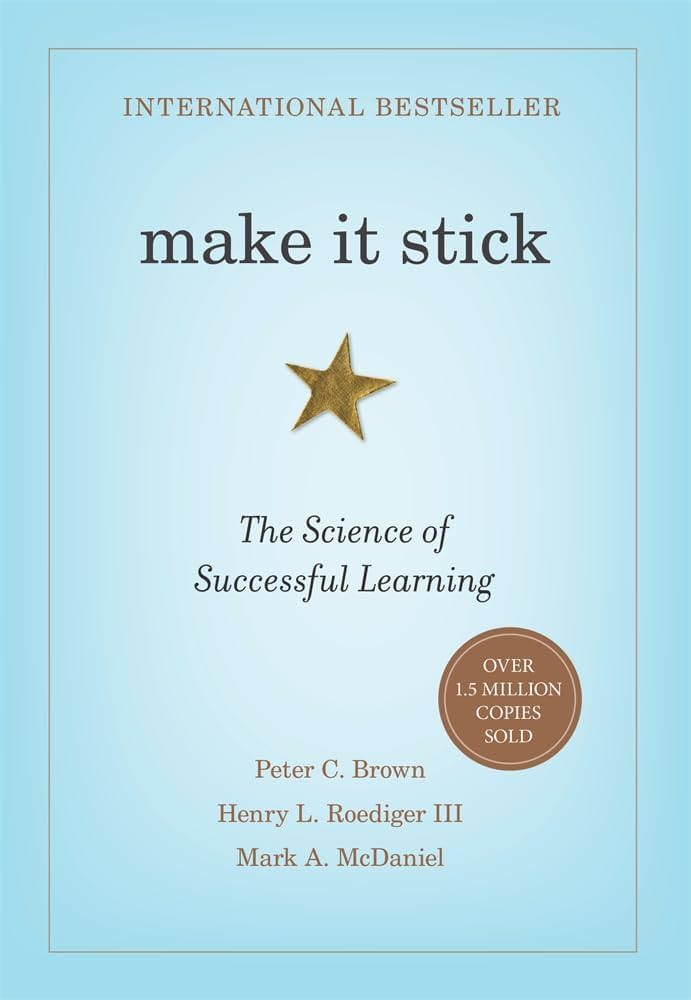
Making It Stick: The Science of Successful Learning
By Peter C. Brown, Henry L. Roediger III, and Mark A. McDaniel
Making It Stick challenges many common assumptions about how learning works. Drawing on decades of cognitive psychology research, the authors show that effective learning is often counterintuitive. Techniques such as rereading, highlighting, and cramming may feel productive, but they produce fragile knowledge. In contrast, strategies like retrieval practice, spaced repetition, interleaving, and elaboration strengthen long-term memory and improve transfer.
Grounded in empirical research, the book explains why effortful practice leads to durable learning and how active recall stabilizes memory. Mastery is presented not as a matter of talent, but as the result of how we practice. Through real-world examples from classrooms, medical training, and professional environments, the authors provide clear, evidence-based principles for students, educators, and lifelong learners who want learning that lasts.
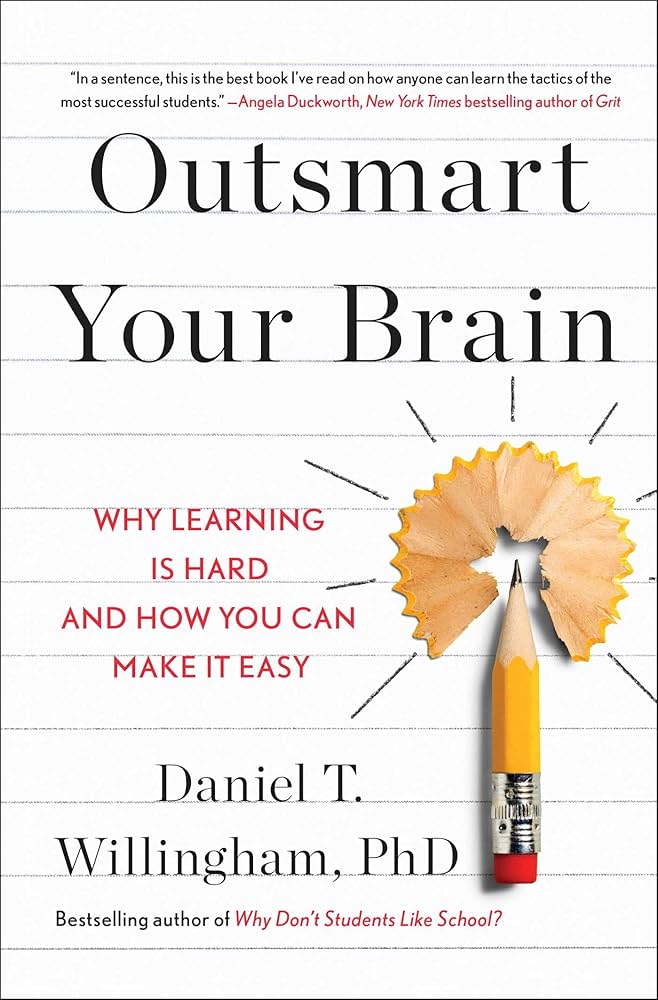
Outsmart Your Brain: Why Learning Is Hard and How You Can Make It Easy
By Daniel T. Willingham
In Outsmart Your Brain, cognitive psychologist Daniel Willingham translates the science of learning into practical strategies students can use immediately. The central premise is simple. Learning feels hard because our brains are not naturally optimized for sustained academic thinking. Once we understand how memory and attention actually work, we can align our habits with those strengths.
Willingham explains core cognitive principles including working memory limits, long-term memory consolidation, retrieval practice, spacing, attention management, and the illusion of competence. He offers concrete advice on reading difficult texts, taking notes, preparing for exams, writing papers, and managing time. Clear and research-driven, this book helps learners replace passive study habits with deliberate, scientifically grounded practice.
The Cone of Apollonius
Around 200 BCE, the Greek geometer Apollonius of Perga published his treatise Conics, an eight-volume work that systematically described the curves produced when a plane intersects a double-napped cone. He gave them the names we still use: ellipse, parabola, and hyperbola. The circle, already well understood, he revealed to be a special case of the ellipse. Together, these four curves became the conic sections, and they would quietly underpin two thousand years of mathematics, astronomy, and physics.
For centuries, the Conics survived not through fame but through the careful labor of scholars who copied, translated, and commented on the text. Among the most significant was Hypatia of Alexandria (c. 355 to 415 CE), a mathematician and philosopher who produced a major commentary on the Conics and taught its geometry to students at the Neoplatonic school in Alexandria. Hypatia worked in a tradition that understood the earth to be spherical and had long debated the geometry of celestial motion. What private insights she drew from the conic sections, we cannot say. Her own writings were lost, and history has a habit of crediting only those whose papers survive. What is certain is that her editorial and intellectual work kept Apollonius alive through a period when such texts were vanishing, and that without scholars like her, the thread connecting ancient geometry to modern astronomy would have broken.
Twelve centuries later, Johannes Kepler picked up that thread. Working from Tycho Brahe's meticulous observations, Kepler demonstrated in 1609 that the planets move not in perfect circles but in ellipses, with the sun at one focus. It was the conic geometry of Apollonius, preserved and transmitted across the centuries, that gave Kepler the mathematical vocabulary for his discovery. Newton would later prove that all orbital paths under gravity are conic sections: ellipses for bound orbits, parabolas and hyperbolas for objects passing through. The cone, then, is more than a classroom model. It is a single shape that contains the geometry of every orbit, every trajectory, every reflective dish and radio telescope. And its survival is owed not only to the geometer who first described it, but to every unnamed scholar who understood its importance and refused to let it disappear.
The Cone of Apollonius
Circle
The purest conic. A horizontal plane slices cleanly through the cone and every point on the resulting curve is equidistant from its center. A circle is simply an ellipse whose axes are equal.
Ellipse
Tilt the cut and the circle stretches. Two foci replace the single center. For every point on the curve, the sum of distances to those foci is constant. Kepler proved the planets travel on ellipses.
Parabola
When the cutting plane exactly matches the slope of the cone wall, the section opens to infinity. Every point is equidistant from a focus and a directrix line. The path of a thrown object in uniform gravity.
Hyperbola
Steepen the cut past the cone slope and the plane slices both nappes, producing two mirror branches that open forever. The constant is the difference of distances to two foci. Sonic booms and orbital slingshots follow this curve.
THE EARTH
"Education is not the filling of a pail, but the lighting of a fire." — Commonly attributed to W.B. Yeats
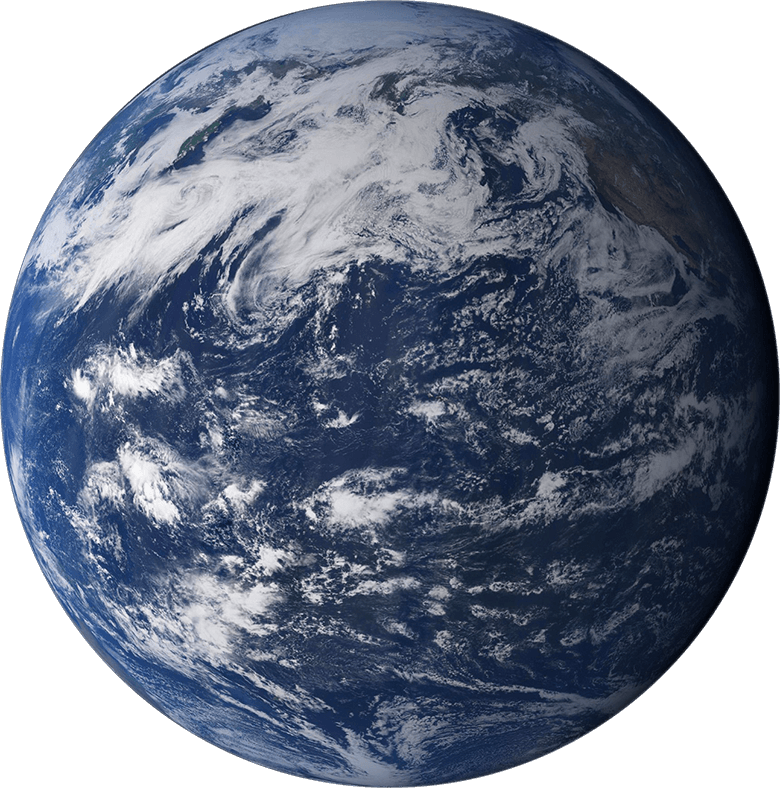
This is where you are. A planet that sustains eight billion lives on a shell of atmosphere thinner, proportionally, than the skin of an apple. Every business ever built, every lesson ever taught, every skill ever mastered happened here, under the same sky you are sitting beneath right now.
You came here because something is not working the way it should. Or because something could work better. Or because the world changed and the skills that got you here are no longer enough to keep you moving.
We believe learning starts where you are, with what you have, right now. Not with abstraction, but with experience. The constructivist tradition in education holds that knowledge is not poured into a passive vessel. It is built, actively, by a learner who is doing something real. Our courses are designed around that principle. We do not lecture at you and hope it sticks. We put tools in your hands, problems in front of you, and structure around you that recedes as your competence grows.
Start where you are. Start with what you have. Start now.
H2O
71% of the Earth's surface is covered in water. Life emerged from those oceans. Every great journey of discovery has required the willingness to leave solid ground.
10,000 km
The Earth's atmosphere extends to a distance of 10,000 km. That thin envelope is the only thing between you and the void. Preparation is not optional. Education is not luxury. They are atmosphere.
SOLAR SYSTEM
"The cosmos is within us. We are made of star stuff. We are a way for the universe to know itself." — Carl Sagan
The solar system formed 4.6 billion years ago from the gravitational collapse of a giant interstellar molecular cloud. From that ancient chaos, order emerged. Not by accident, but through the patient operation of forces that never stopped working. Eight worlds took shape, each with its own composition, its own atmosphere, its own relationship to the light.
Learning follows a similar trajectory. It begins in complexity and confusion, and through sustained effort it resolves into something structured, something you can navigate.
The instructional design behind our courses is built on this understanding. We reduce cognitive load so your working memory is not overwhelmed. We segment complex topics into manageable pieces. We signal what matters and eliminate what distracts. These are not opinions about teaching. They are evidence-based principles drawn from decades of research into how human beings actually process and retain information.
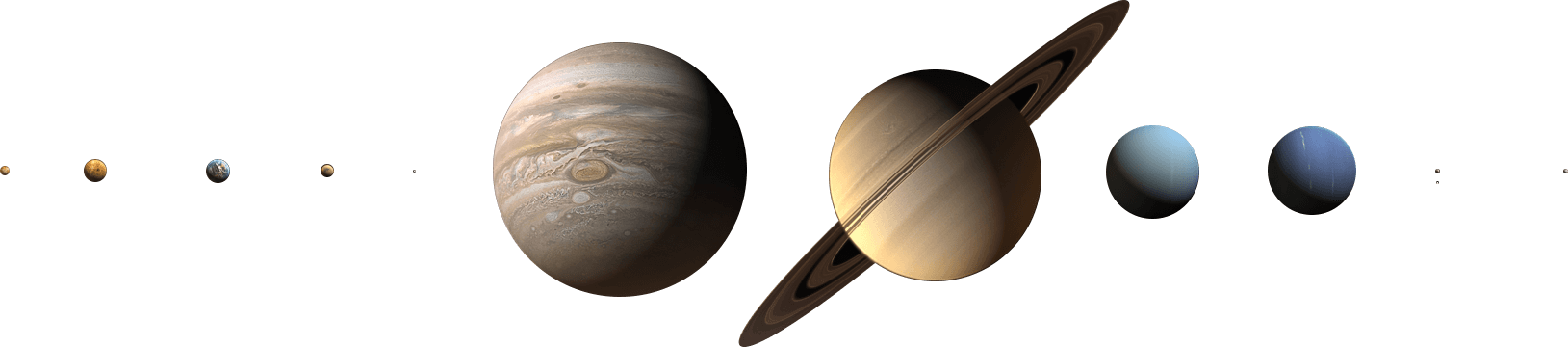
The Solar System formed 4.6 billion years ago from the gravitational collapse of a giant interstellar molecular cloud.
In 2019, a Harris Poll commissioned by the LEGO Group asked children across three countries what they wanted to be when they grew up. In the United States, 29% of children chose YouTuber. In China, 56% chose astronaut. The difference was not talent. It was aspiration. What a culture aspires to its children reach for. We believe in reaching for the stars.
The word "education" comes from the Latin educere — to lead out. Not to pour in. The Socratic method understood this twenty-four centuries ago: the teacher does not fill the vessel. The teacher lights the fire. Our courses are built on this principle. We do not lecture. We provoke. We challenge. We build.
THE MOON
"We choose to go to the Moon in this decade and do the other things, not because they are easy, but because they are hard." — John F. Kennedy, 1962
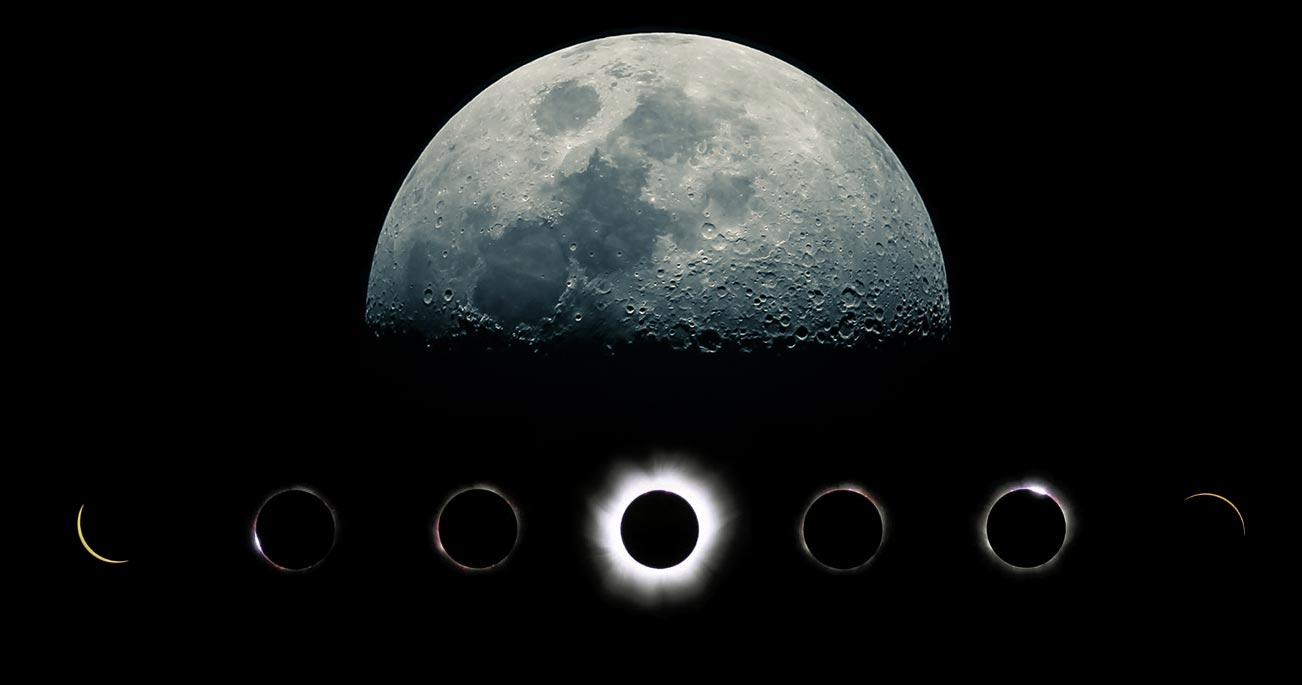
Earth's only natural satellite orbits at a mean distance of 384,400 kilometers. It has no atmosphere, no magnetic field, no protection from the void. And yet it governs our tides, stabilizes our planet's axial tilt, and gave ancient navigators a clock written in the sky.
The Moon generates no light of its own. Everything you see when you look up at it is reflected sunlight. There is a lesson in that for how we think about learning. The best learners are not the ones who arrive already luminous. They are the ones who know how to gather light from every available source and aim it exactly where it is needed.
Reflection is not a soft skill. It is a cognitive strategy. Metacognition, the practice of thinking about your own thinking, is what separates passive consumption from active learning. Our courses build in structured reflection at every stage: content reflection on what you learned, process reflection on how you learned it, and premise reflection on why it matters. When you examine your own learning, you do not just retain more. You transfer more. You apply more. You become someone who can teach yourself the next thing, and the thing after that.
When you are ready to stop watching and start building, the courses below are your launchpad.
MARS
"The impediment to action advances action. What stands in the way becomes the way." — Marcus Aurelius, Meditations
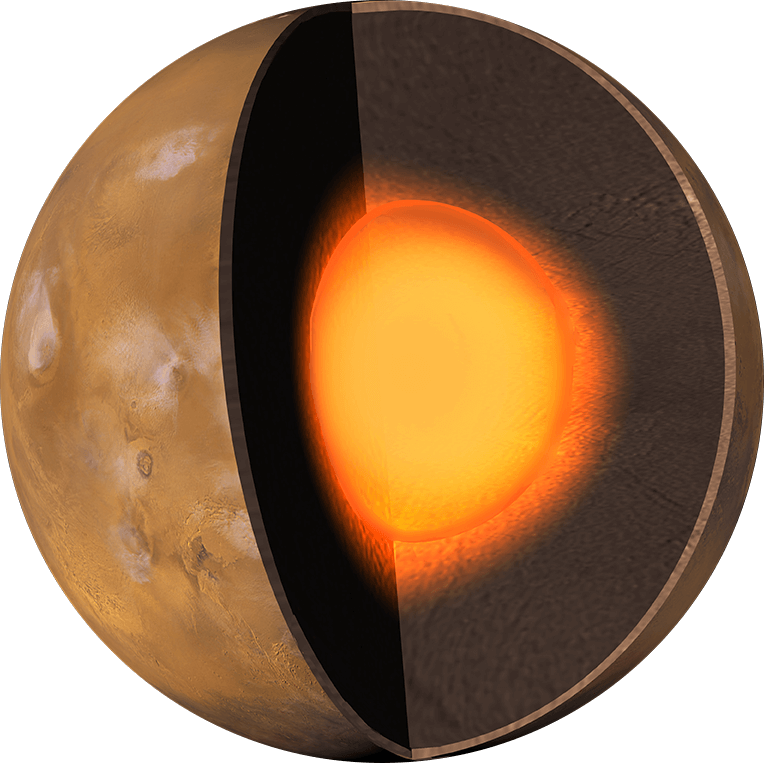
The fourth planet from the Sun has captivated human imagination for millennia. It glows red in the night sky, a perpetual challenge, close enough to dream about and far enough away to demand everything we have.
Mars is home to Olympus Mons, the tallest mountain in the solar system, rising 21.9 kilometers above the surrounding plains. Nearly two and a half times the height of Everest. It was not built in a single eruption. It was built by millions of years of volcanic persistence, layer upon layer upon layer. That is how mastery works. Not in a flash of genius, but in the patient, stubborn accumulation of effort over time.
McClusky's Theory of Margin describes what every adult learner already knows in their bones: you have a finite amount of energy, and life is already using most of it. The distance between what life demands of you (load) and what you have left to give (power) is your margin. When margin is thin, learning feels impossible. When someone acknowledges that reality and designs instruction that respects it, learning becomes possible again. We design for real people with real lives who cannot afford to waste time on learning that does not teach.
The moons of doom
Mars has two moons: Phobos and Deimos. Fear and Dread, named for the sons of Ares. Phobos orbits so close to Mars that tidal forces are slowly tearing it apart. In roughly 50 million years, it will crash into the surface or shatter into a ring.
Your window for learning, for adapting, for becoming something more than what you were yesterday, does not stay open indefinitely. The time to begin is not next quarter. It is now.
Terraforming
To inhabit Mars, we would need to create an atmosphere from almost nothing. The planet's air is 95.97% carbon dioxide. No living organism we know can breathe it. Transforming Mars into a habitable world would require technology we have not yet built, applied with patience we have not yet demonstrated.
But that has always been the story. Every great achievement in human history was, at some earlier moment, flatly impossible. The gap between impossible and accomplished is always the same bridge: someone learned what no one knew yet, and then they taught it to someone else.
That is what we do here.
"The only true wisdom is in knowing you know nothing." — Socrates
You did not come here because everything is working. You came here because something inside you, the same restless impulse that made the first humans look up at the night sky and wonder, told you there is more.
More to know.
More to build.
More to become.
This is a foothold for that becoming.
We build courses the way the ancients built philosophy: through questions that matter, problems that resist easy answers, and the stubborn belief that an un-examined business, like an un-examined life, is NOT the one worth running.
The stars are not destinations. They are directions.
Let Us Begin.
"You teach best what you most need to know."
— Richard Bach, Illusions
THE BUSINESS