Learning Objectives
After completing this lesson, you will be able to:
- Perform a Face Check diagnostic to identify common lighting problems on a subject.
- Execute the Hand Test to determine optimal key light direction.
- Catalog all light sources (natural and artificial) in a recording environment.
- Describe the difference between news-style flat lighting and conversational Da Vinci lighting.
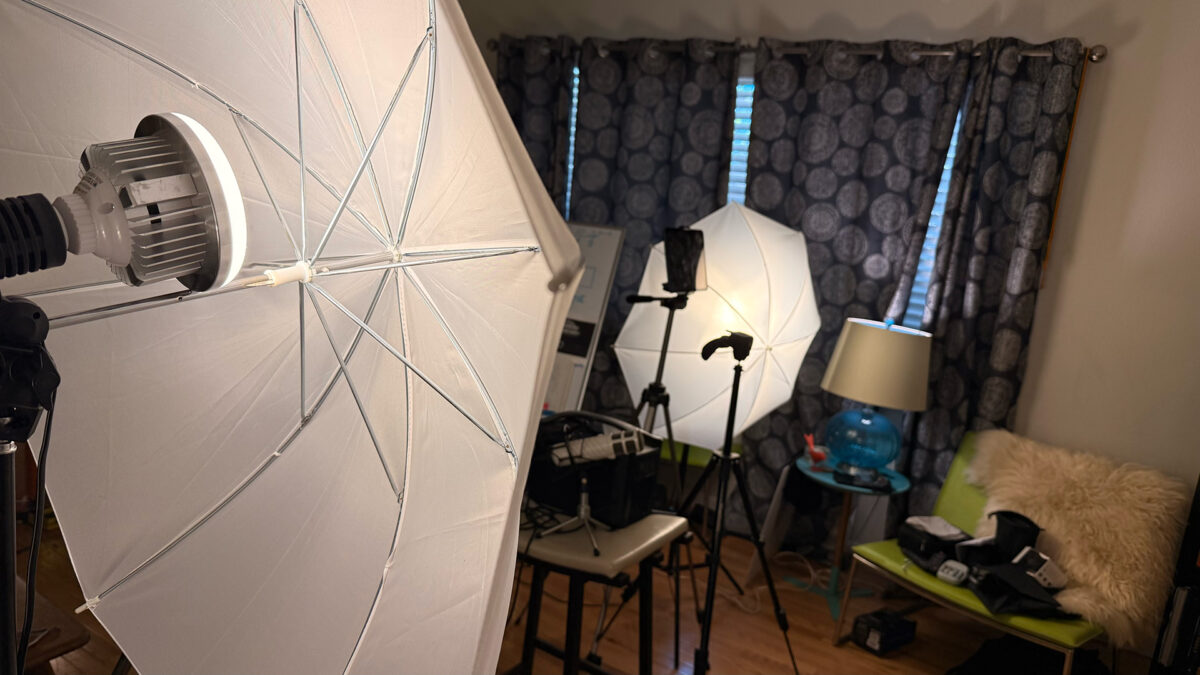
- Set up a basic lighting arrangement using affordable equipment (umbrella lights or paper lanterns).
- Explain why production polish should match audience expectations.
Vocabulary
|
Term |
Definition |
|
Key Light |
The primary light source illuminating your subject. Positioned at approximately 45 degrees to one side of the camera. |
|
Fill Light |
A secondary, softer light opposite the key light to reduce harsh shadows. Can be an actual light or a reflective surface. |
|
Backlight |
A light behind and above the subject creating a rim of light that separates them from the background. |
|
Three-Point Lighting |
The standard setup using key, fill, and backlight. The foundation of professional interview lighting. |
|
Da Vinci Lighting |
Asymmetrical lighting where one side of the face is brighter, creating a shadow triangle from nose to cheek. Named for Da Vinci’s painting style. |
|
News Look |
Flat, even lighting from multiple directions eliminating all shadows. Standard in broadcast journalism. |
|
Color Temperature |
Warmth or coolness of light, measured in Kelvin. Daylight ~5600K (cool). Tungsten ~3200K (warm). |
|
Diffusion |
Material that softens and spreads light, reducing harsh shadows. Umbrella lights and paper lanterns are diffusers. |
|
Practical Light |
A light visible within the scene (desk lamp, bookshelf light). Contributes to set design and can serve as accent lighting. |
Core Concepts
The Face Check
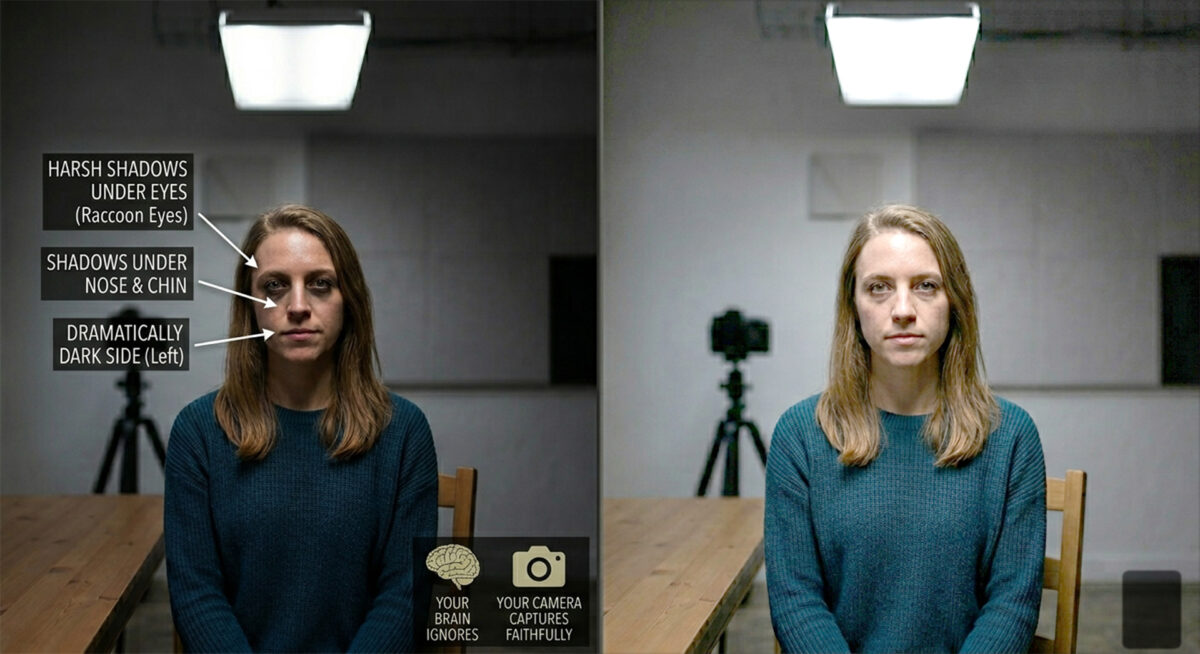
Before adjusting any lights, diagnose what you have. Have your subject sit in their recording position and walk up close. Look for harsh shadows under the eyes (overhead light too strong), shadows under nose and chin (same problem), one side dramatically darker (unbalanced side lighting), and dark circles or raccoon eyes (ceiling fixtures). Your brain ignores these, but your camera captures them faithfully.
The Hand Test
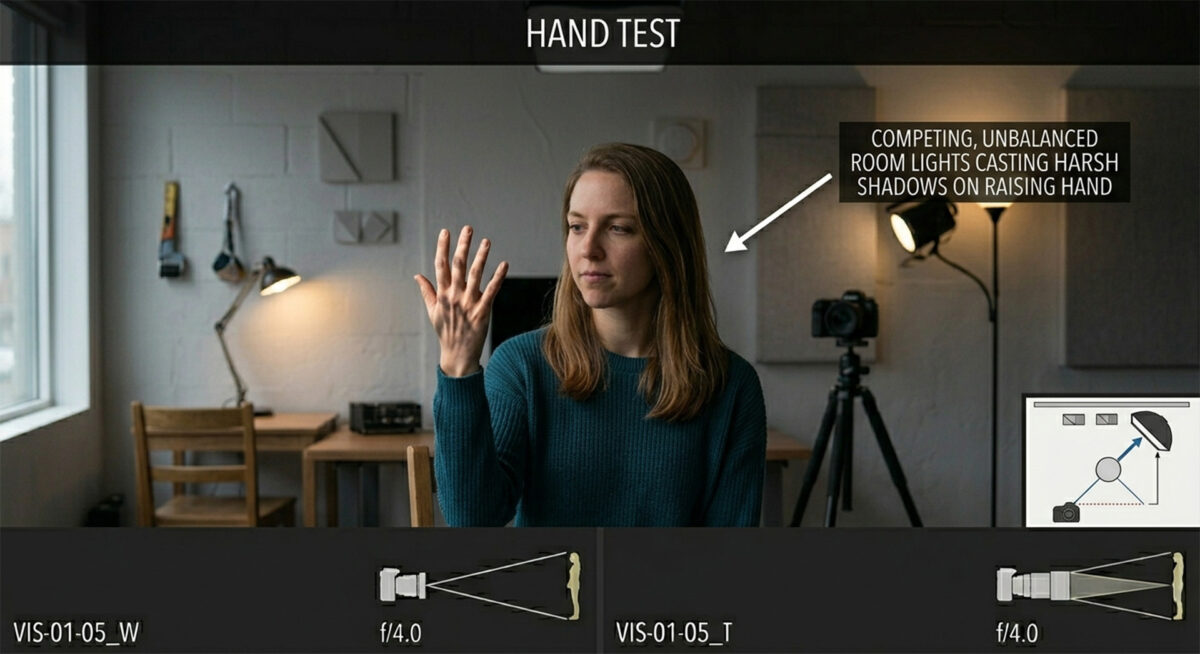
Hold your hand six inches from your face while your subject sits in position. Turn slowly in a circle. Where your hand looks most evenly illuminated is the optimal direction for your key light. Where harsh shadow lines appear indicates problematic sources. Takes 30 seconds and gives you a practical read on the room.
The Light Source Survey
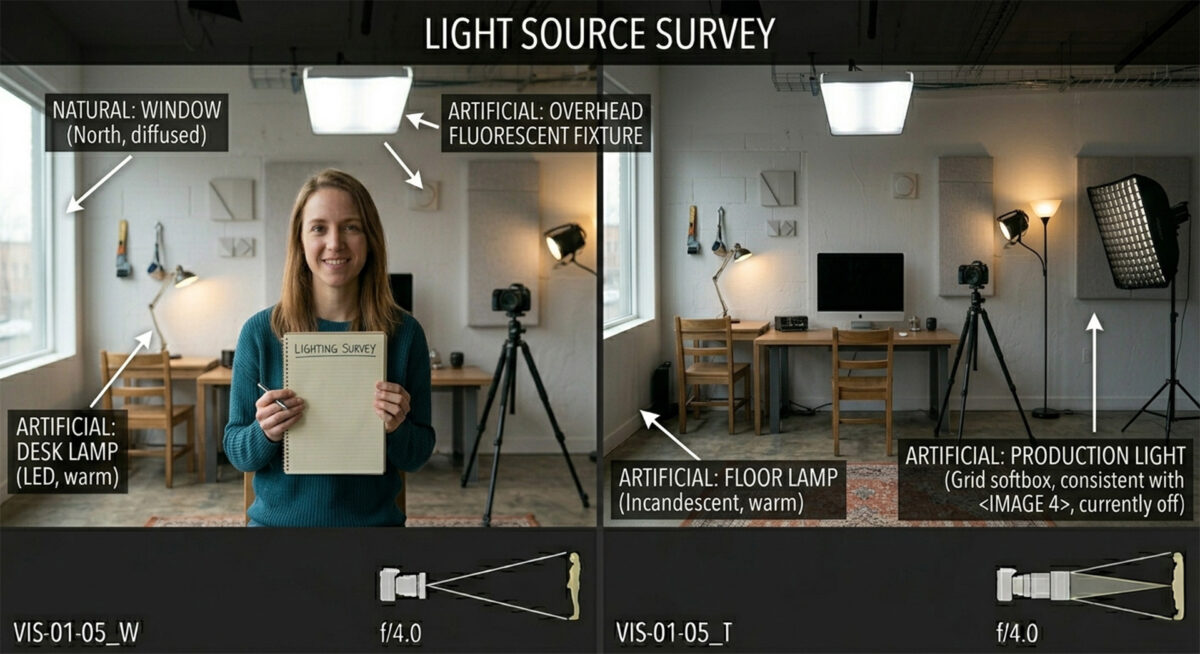
Catalog every source of light in your space. Natural: windows, skylights, glass doors (note direction). Artificial: overhead fixtures, desk lamps, floor lamps, production lights. Write it down for reference when making lighting decisions.
Da Vinci Lighting vs. The News Look
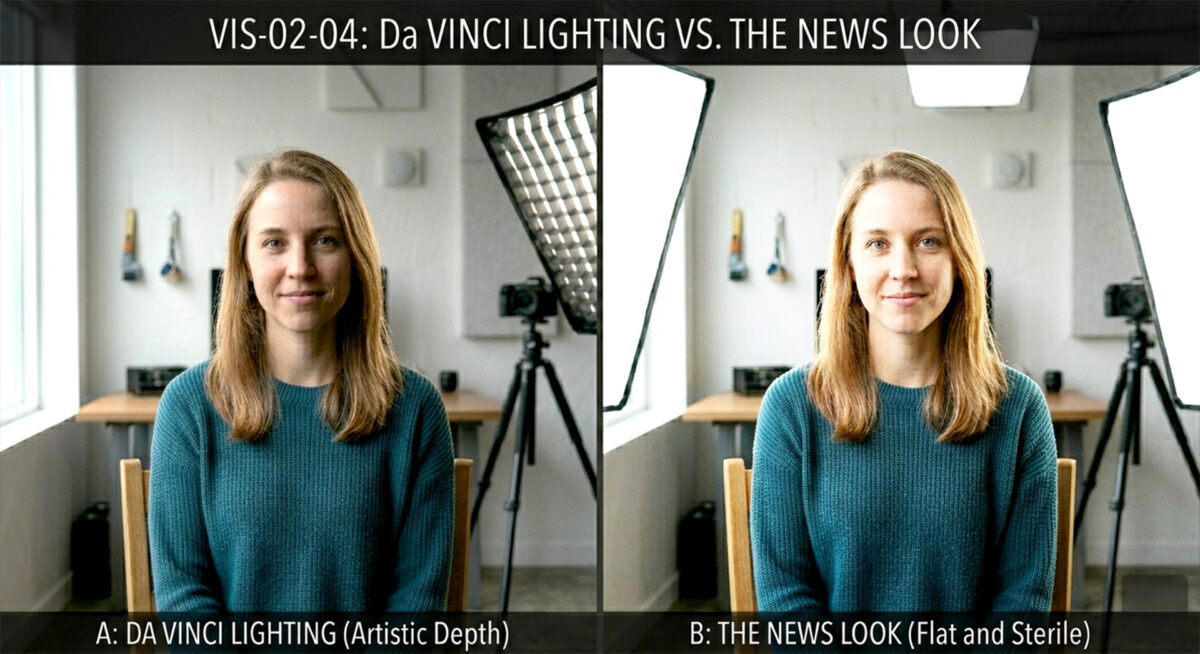
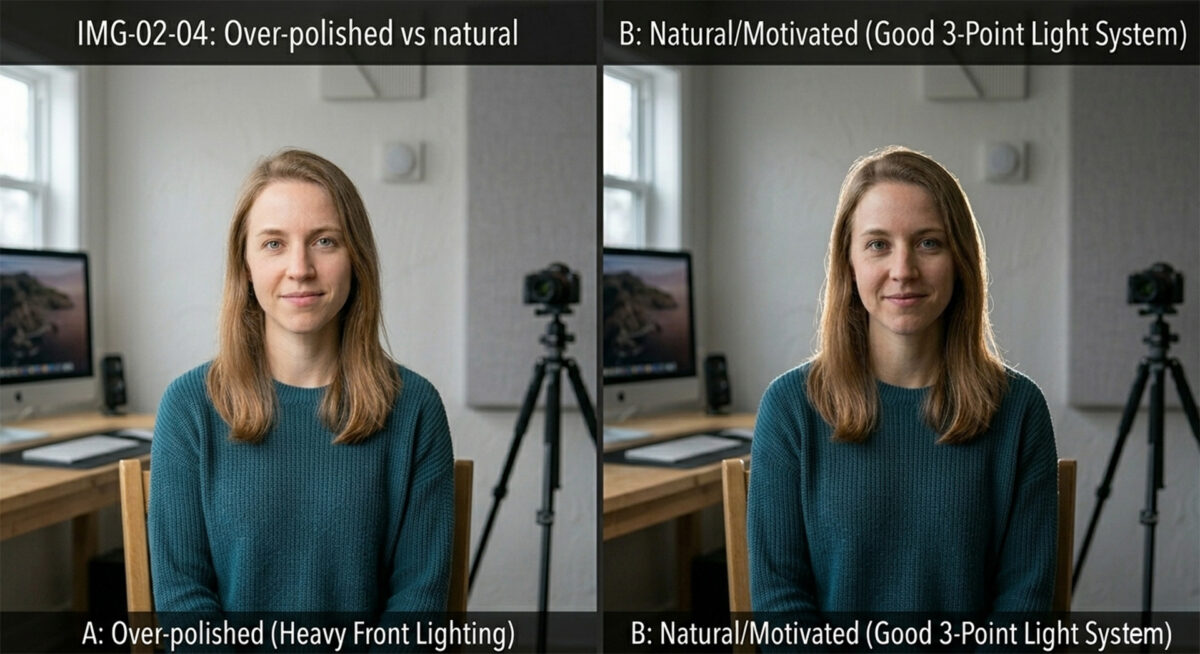
John Elias draws a clear distinction between two approaches. The news look uses flat, even lighting from multiple directions. Clean and authoritative, but sterile for conversation. Da Vinci lighting lets one side carry more shadow. Key light at 45 degrees, minimal or no fill opposite. The shadow triangle from nose across cheek creates depth and intimacy (J. Elias, March 17, 2026). For podcasting, aim for subtle asymmetry: enough for dimension, not enough to distract.
For a super in depth lighting lesson check out Markus Pix:
Markus on lighting
Lighting Simulator
Position map (drag to move)
Light intensity and color
Budget Lighting That Works
Umbrella lights: a pair with remote control costs approximately $100. Japanese paper lanterns: $20-30 each on Amazon. Both produce diffused, flattering light. For Da Vinci asymmetry, use only one front light or move one farther away. Without any purchases: face your subject toward a window, use white poster board as a fill reflector, turn off ceiling lights, use a desk lamp behind the subject as a backlight.
Matching Production to Audience
John Elias produced TV commercials for a warehouse furniture store. When they looked too polished, customers assumed prices were inflated. Your production quality should match audience expectations. Casual podcast = warm, natural lighting. Authority-driven show = more polish. A mismatch undermines trust (J. Elias, 2026).
The Zsigmond Test
Vilmos Zsigmond said the best way to know good lighting is when you do not notice it. After setup, have someone uninvolved look at your subject on camera. If their first reaction references the lighting, adjust.
Scenario: The Apartment Bedroom Studio Spare bedroom: one east-facing window, overhead ceiling fan with light kit, floor lamp in corner. Turn off the ceiling light. Position your subject facing the window at ~45 degrees (free key light). Lean white foam core on the shadow side for fill. Move the floor lamp behind the subject at low brightness for backlight. Check on camera. Total cost: one piece of foam core, about four dollars. |
Graduate Student Tip If you record at different times of day, your window light changes color temperature and intensity. Dedicated lights (even cheap ones) give you consistency between sessions. Viewers notice when lighting changes from episode to episode. Consistency is part of your brand. |
Hands-On Exercise: The Four-Light Comparison
Photograph your subject in four lighting conditions:
- Overhead ceiling lights only (control image).
- One light from the side, all others off.
- Da Vinci look: key at 45 degrees, one side brighter. Minimal fill.
- Your best warm, natural, conversational lighting. Aim for the Zsigmond standard.
Save and label all four photos. These are your reference images for tracking progress.
Self-Check Questions
- What is the purpose of the Face Check, and what are you looking for?
- How does the Hand Test help you find the right direction for your key light?
- Describe the difference between the news look and Da Vinci lighting.
- Name two affordable lighting options under $100 total.
- Why should your lighting style match your audience’s expectations?
- What is the Zsigmond test for evaluating your lighting?